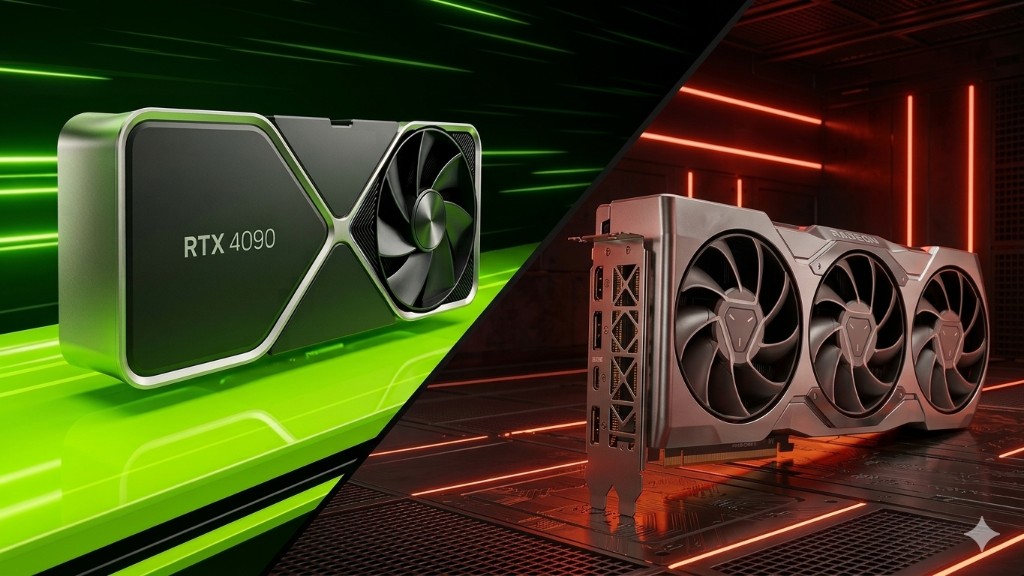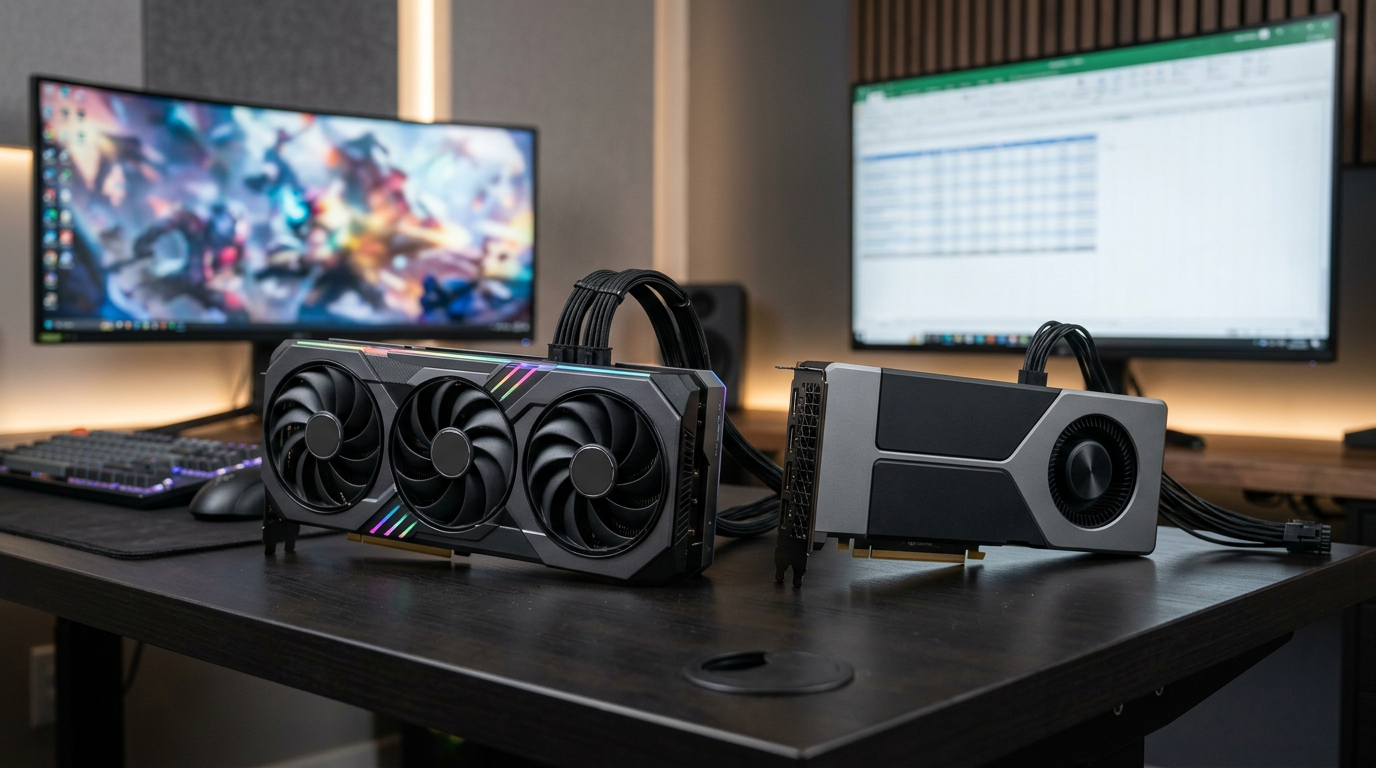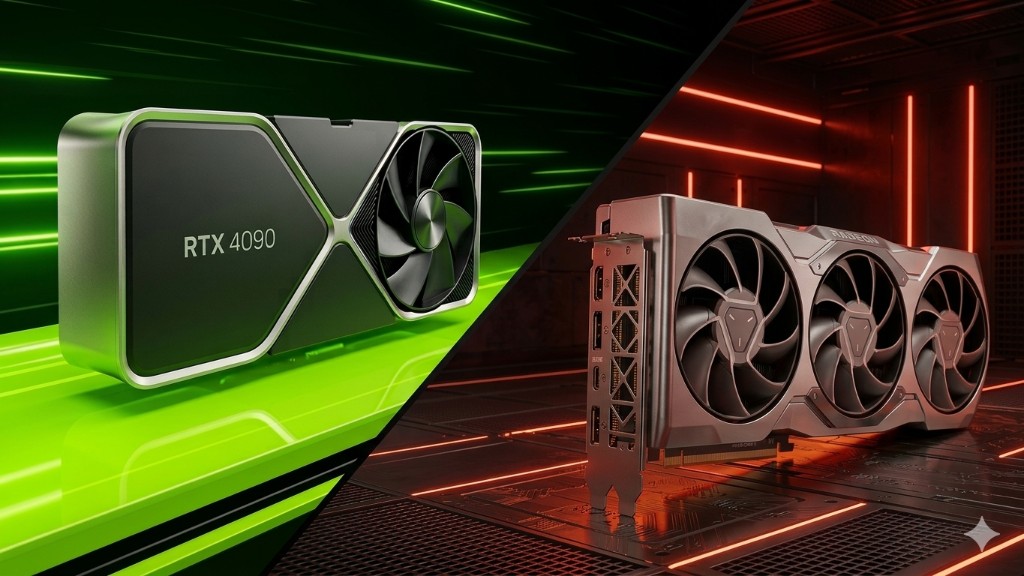
Workstation GPU vs gaming GPU: what’s better for work?
“Pro” workstation cards are not automatically faster for every job. For many Ontarians doing video, 3D, code, and AI side projects, a solid RTX or Radeon RX gaming-class GPU is the better value, if you match VRAM and software to what you actually run.
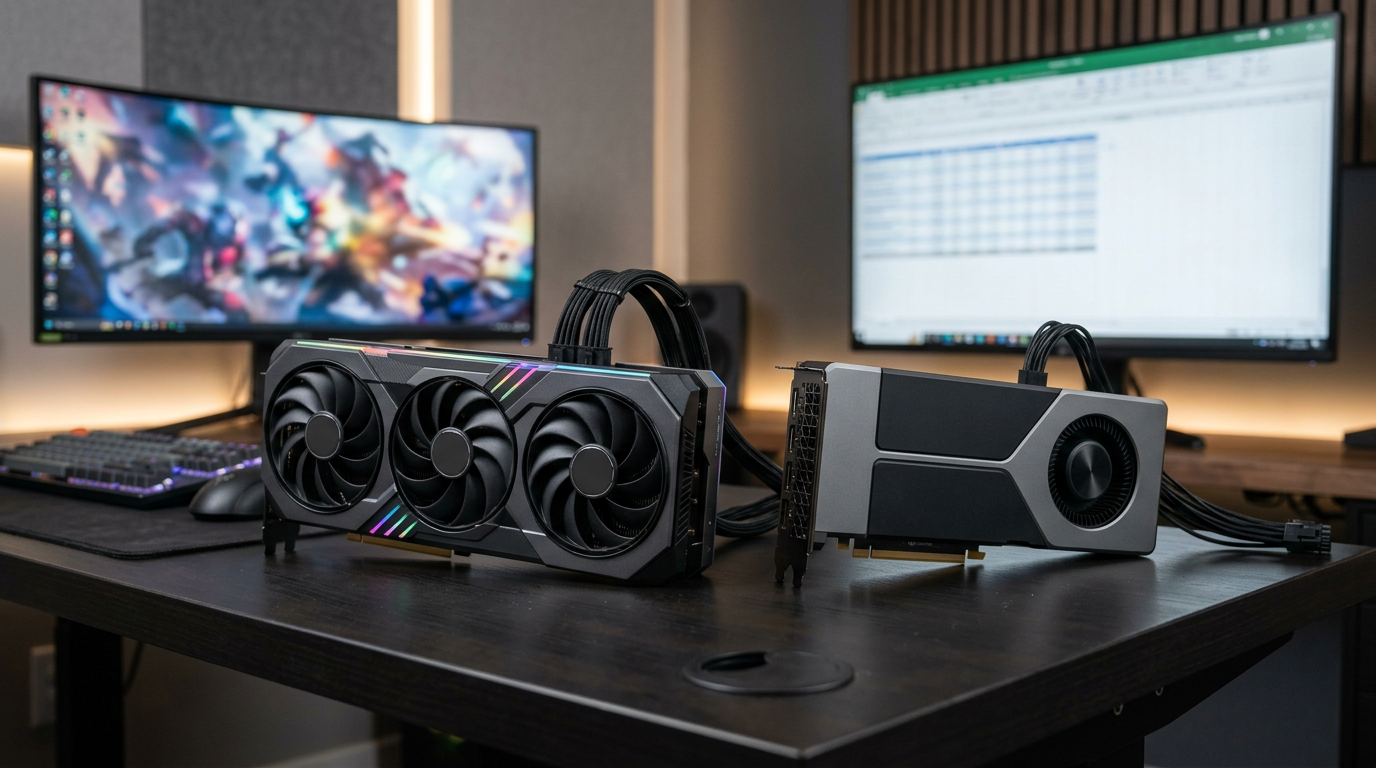
What “workstation” usually means
NVIDIA’s RTX pro line (formerly Quadro) and AMD Radeon Pro cards are built for long uptimes, ISV-certified drivers (tested with specific professional apps from independent software vendors) for programs like CAD and medical imaging, and sometimes ECC memory (error-correcting VRAM) on the GPU. They excel when your employer or software vendor requires that certification path, or when you need specific display outputs and sync for pro monitors.
When a gaming GPU is better for work
Consumer GeForce RTX and Radeon RX cards often deliver more raw performance per dollar than their workstation twins based on the same silicon. Blender, DaVinci Resolve, most game engines, and a huge slice of ML tooling lean on the same CUDA (NVIDIA’s compute stack) / RT cores (hardware ray tracing) / VRAM (video memory) you get on the gaming parts. If you are freelancing or buying used in Ontario, a vetted RTX or RX build is frequently the pragmatic choice.
VRAM still rules
For video at 4K+ timelines, 3D texturing, or local AI models, running out of VRAM is instant pain. Prioritize capacity and memory bus width over the “workstation” label. Our local AI PC specs article goes deeper on that angle.
Drivers and stability
Studio / pro-driver branches exist for many GeForce cards and can be worth trying if you hit odd bugs in Adobe or 3D tools. That is not the same as paying for a full workstation SKU, it is a workflow tweak.
Bottom line
For gaming plus serious hobby or freelance work, a quality RTX or RX gaming PC with enough RAM and fast storage is usually the sweet spot. For strict corporate CAD / medical / broadcast contracts, ask your IT team whether they require certified workstation hardware before you shop.
Also read RTX vs RX for gaming and Contact us with your software list, we can suggest a build.
Explore more