Trade In Your PC or Sell It Yourself in Ontario
A trade-in is a speed purchase. Selling it yourself can pay more. The right choice is whichever one you will actually finish.
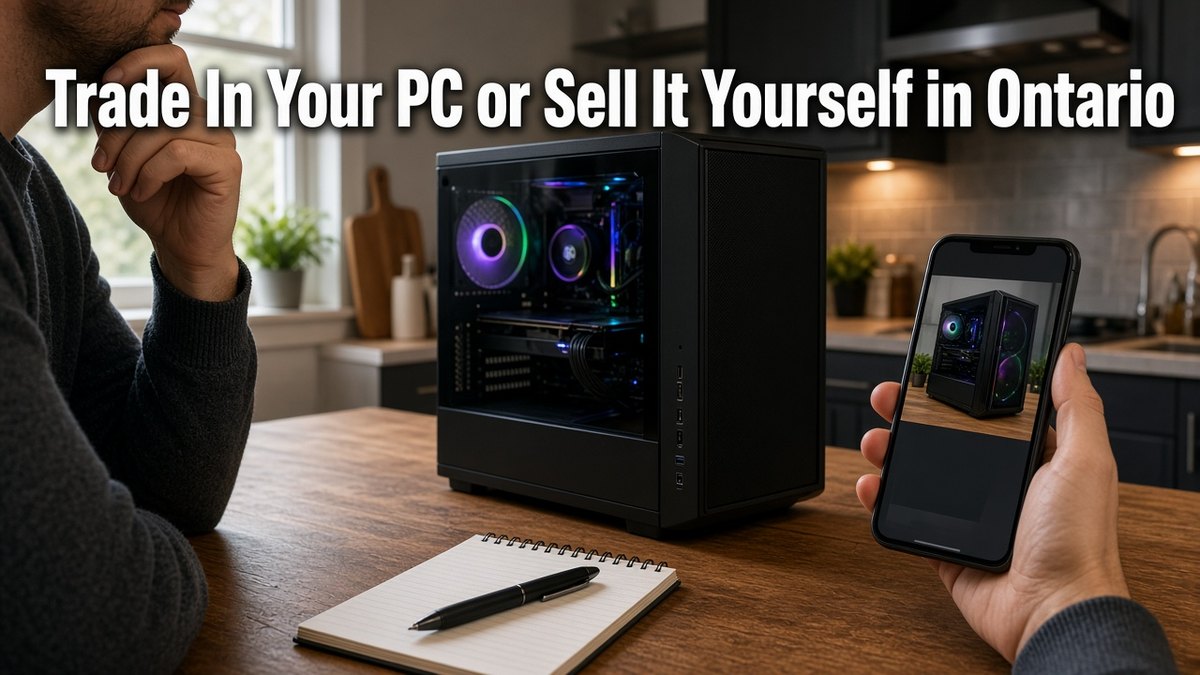
A trade-in quote and a private-sale price are not the same kind of money. The trade-in is what someone will give you today, often as store credit, so they can resell the PC. The private sale is what a player might pay after you do the listing, the messages, and the meetup. Pick the one that matches your deadline.
What is a PC trade-in actually offering?
Big-box and local shop trade-ins are built for convenience. You drop the PC off, they check that it turns on, and they put a number on it. That number is lower than a patient Kijiji sale because the shop still has to test, warranty, and sell it. Ask if the quote is cash or store credit. Credit only helps if you were going to buy from that shop anyway.
Write down what the quote includes. Windows, the power cable, and a working drive can change it. A quote that assumes "i7 and 8GB graphics" without the real model is a guess. Send exact parts if you want a number you can compare.
When does selling it yourself pay more?
A private buyer can pay more because there is no shop margin. You earn that by taking photos, answering "is the price firm," and meeting people who do not show. If you have a week and a working PC with a desirable GPU, the private listing is usually the higher ceiling. Use the Ontario selling guide so the ad is specific enough to get real replies.
Cash and e-transfer both work. Confirm the transfer in your bank app before the tower leaves. The cash sale guide covers counting bills and what to do when the amount is large enough that a transfer is simpler.
Where does a local buyer fit?
A local buyer sits between the shop credit and the week of Marketplace chats. You send specs and photos, get a yes or no, and meet once. The offer should be lower than the best private sale and higher than a vague trade-in that is only store credit. Ontario PC Buy and Sell does this for gaming PCs and laptops through the sell form. City, condition, and the real GPU model decide if an offer makes sense.
How do you compare the three numbers?
Put the trade-in, the local offer, and your realistic private price in one note. Subtract the time you will spend, any repair the PC needs, and the cost of the next computer if the trade-in locks you into one store. A low trade-in plus an expensive replacement can cost more than selling the old PC yourself and shopping around.
If you need the PC gone this weekend, take the fair local offer or the trade-in and stop watching the listing. If you can wait and you like dealing with buyers, list it. Do not start a private sale and then feel forced to accept the first lowball because you already told the shop no.
Frequently asked questions
Is a PC trade-in the same as cash?
Not always. Ask if the quote is cash or store credit. Credit is only useful if you wanted to buy from that same shop.
Will I get more if I sell it myself?
Often yes, if the PC works and you can wait for a real buyer. You trade that extra money for photos, messages, no-shows, and payment checks.
What if the trade-in quote seems low?
Compare it with a local buyer and with current listings for the same GPU and CPU. A low quote can still be fair if you need speed and the PC has problems you did not mention.
Can I trade in a PC that has an issue?
You can ask. Disclose the fault. A PC that crashes or overheats will be priced differently from one that boots and stays on.
Key takeaways
- Trade-in money is a convenience price. Confirm whether it is cash or store credit.
- A private sale can pay more if you have time to list, test, and meet.
- Compare the quote with the PC you would buy next, not only with the number on its own.
Want a local number before you trade it in? Start with the sell form or send the specs.
Explore more