Where to Sell Computer Parts for Cash in Ontario
GPUs and recent CPUs can sell on their own. Old cases, bare hard drives, and no-name power supplies usually do not pay you for the time.
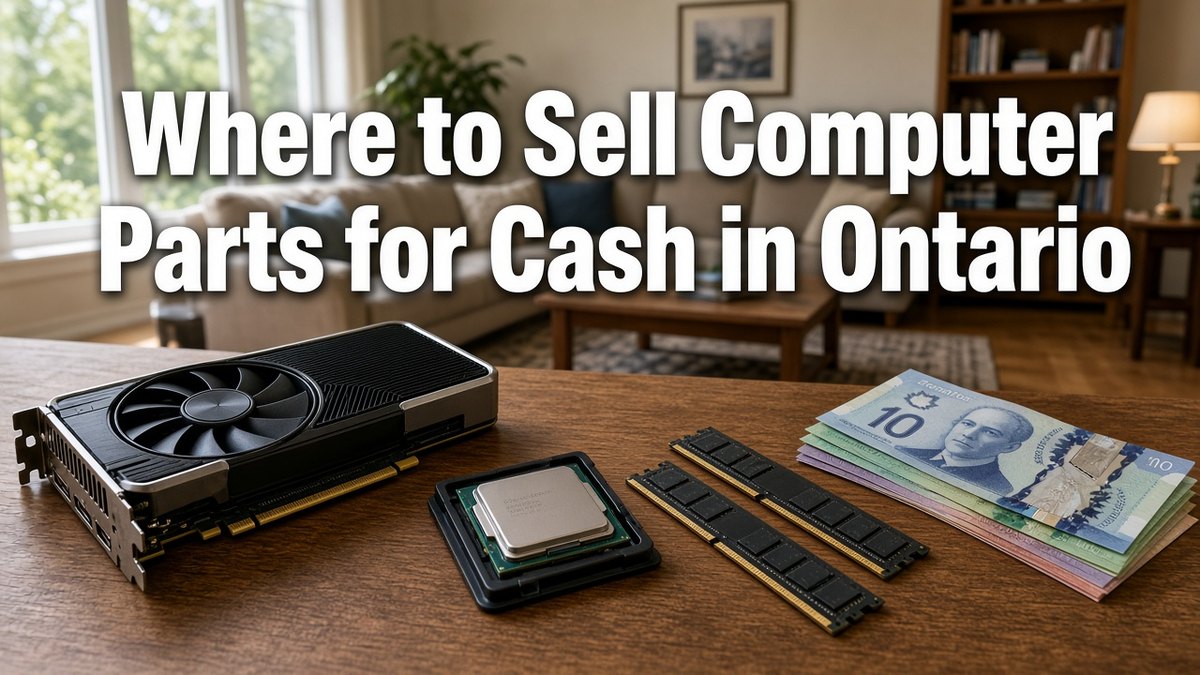
You can sell computer parts for cash in Ontario, but not every part has a buyer. A current graphics card or CPU can move. A ten-year-old case, a loose hard drive, and a power supply with the label scratched off usually sit. If the PC still works as a set, selling it whole is often less work for similar money.
Which parts do people actually pay cash for?
Graphics cards with a clear model name sell first. Desktop CPUs from the last few generations sell next, especially if you still have the box or you can show the name in Windows. Matched RAM sticks with the speed printed on them sell better than mixed sticks you pulled from two PCs.
Branded power supplies sell when the model and wattage are readable and the cables are included. Storage can sell if you can show the size and health, and if you have wiped it. Cases, DVD drives, and generic fans are the parts most people should not spend a Saturday listing.
Where can you sell parts in Ontario?
Local options are Facebook Marketplace, Kijiji, a computer shop that takes trades, and a buyer who wants the whole PC. Marketplace and Kijiji can pay more for a desirable GPU because you are selling straight to the next person. You also handle the messages, the meetup, and the test.
A shop or a PC buyer is faster and usually pays less, because they still have to test and resell. Ontario PC Buy and Sell looks at complete gaming PCs and laptops through the sell form. If you are parting a machine out, say so in the notes or contact us with the part list. A dead motherboard and a good GPU is a different offer than a working tower.
When is parting out a bad idea?
Part it out when one part is worth most of the PC and the rest is old. A strong GPU in a cheap office PC is the usual example. Keep it together when the CPU, GPU, RAM, and power supply are in the same class and the PC boots. Several small sales mean several meetups, and the leftover parts often never sell.
The guide on where to sell a whole gaming PC is the better path if the machine powers on and the parts match. Use selling for cash for the payment side once you know you are selling a complete system.
What should you show a buyer?
For a GPU, show the model on the card and a photo of it installed or on a bench, plus the power plugs. For a CPU, show the name from the system screen or the IHS if you know how to handle it without bending pins. For RAM, show the sticker. For a power supply, show the label. Wipe drives before they leave, and do not include passwords.
Cash is fine for smaller parts if you count it before you hand the part over. For anything expensive, confirm an e-transfer in your banking app first. Meet somewhere you can walk away if the money is wrong.
Frequently asked questions
Can I sell just a graphics card in Ontario?
Yes. A named GPU is the part most people can sell on its own. Bring the model, a photo, and be ready for the buyer to want a short test.
Do old power supplies sell?
A known brand with a readable wattage and the original cables can sell. A no-name unit, or one with missing cables, usually is not worth a separate listing.
Should I sell RAM separately?
Sell it separately when you have a matched kit and the speed is on the sticker. Mixed or unlabeled sticks are harder to price and easier to leave in the PC.
Is a whole PC easier to sell than parts?
Yes when it boots and the parts are balanced. You do one meetup instead of four, and you are not stuck with the case and the hard drive.
Key takeaways
- GPUs, recent CPUs, and labeled RAM are the parts that sell. Mystery power supplies and old cases usually do not.
- Part out a PC when one part carries the value. Sell it whole when it still works as a set.
- Count cash or confirm the e-transfer before the part changes hands.
Selling a complete PC? Use the sell form or read where to sell a gaming PC near you.
Explore more